What has Google presented?
Google Research has published 'The sleep framework' on its blog, a method that lets a language model keep learning after it has been deployed. It is signed by Ali Behrouz and Vahab Mirrokni, with researchers from Cornell University and the University of Southern California.
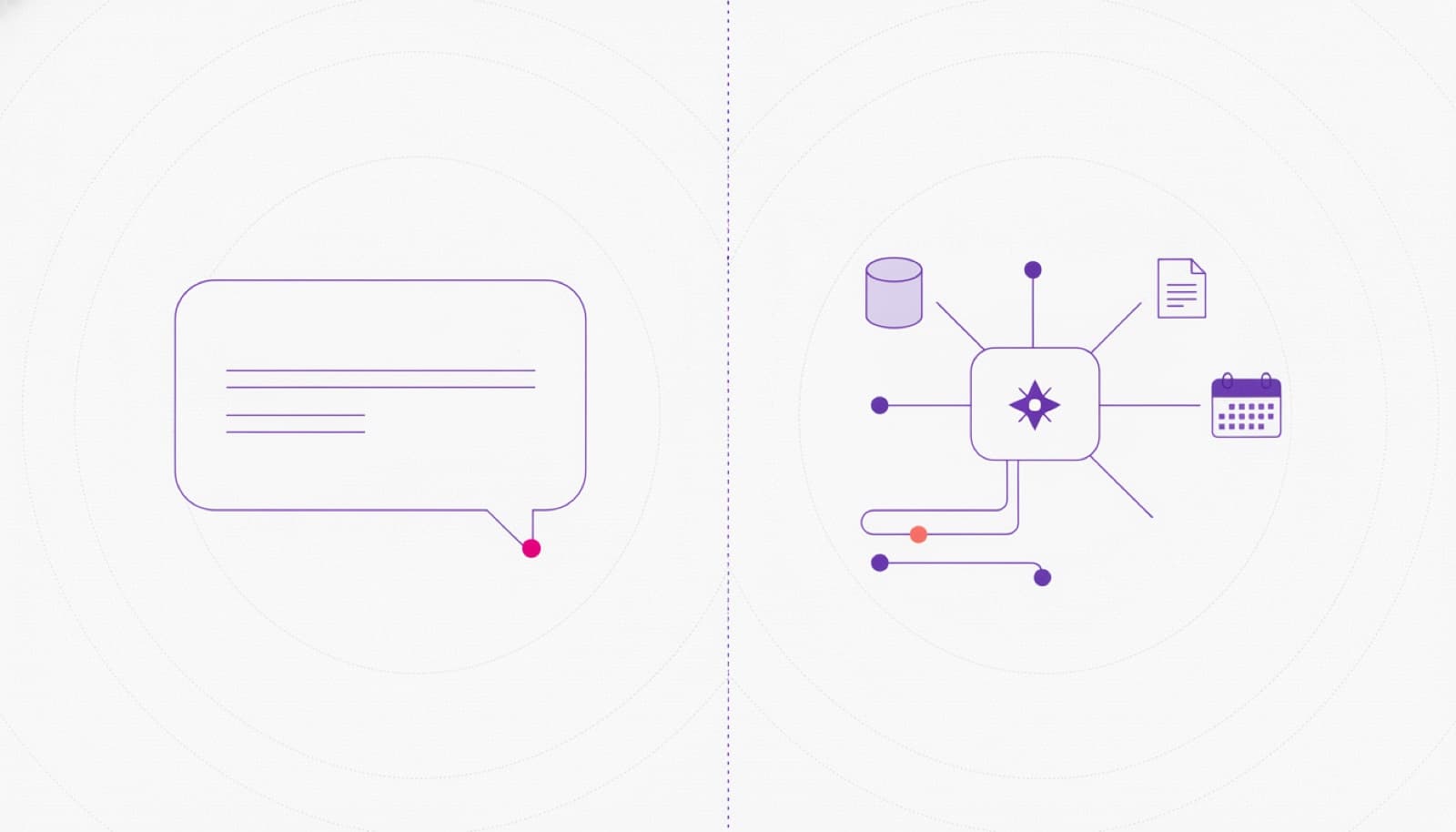
The problem it tackles is well known. A model like the ones behind ChatGPT or Gemini knows what it saw up to a certain date. What you tell it in a conversation it uses while the conversation is open, then loses. If you retrain it on new data, it often gets worse at what it already knew. Researchers call this catastrophic forgetting.
How does a model 'sleep'?
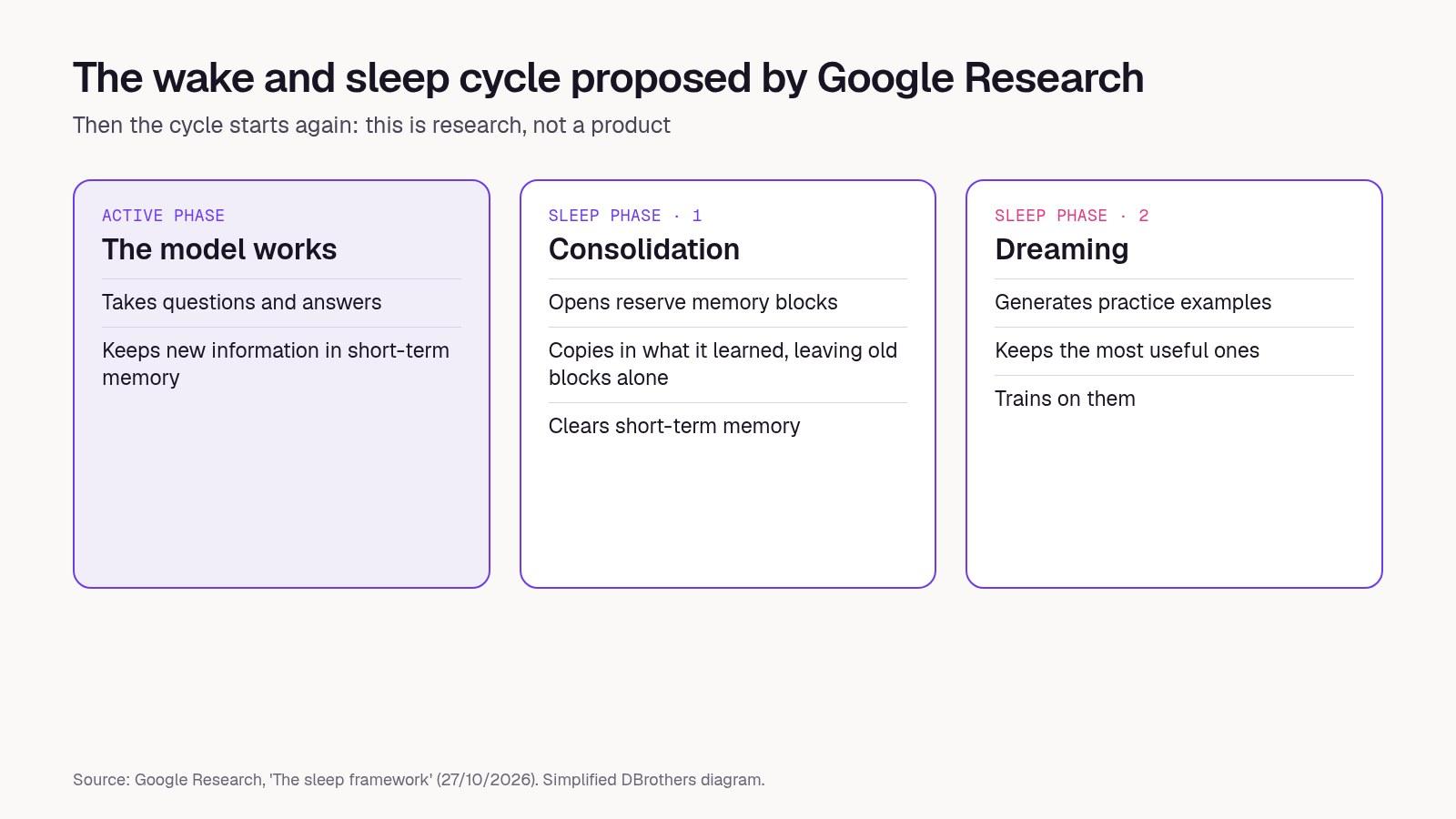
The model alternates two states. In the active phase it works: it takes questions, answers them and keeps new information in a short-term memory. In the sleep phase it stops taking requests and works on itself, in two steps.
- Consolidation. The model opens long-term memory blocks held in reserve and copies into them what it learned in conversation, without touching the blocks already in use. Then it clears the short-term memory.
- Dreaming. The model generates its own practice examples, keeps the most useful ones and trains on them. Google says this is meant to improve reasoning, not just recall.
Google points out that the names come from neuroscience, but the system stays within a fixed architecture and training rules written by people. The model's weights change, not its design.
What do the tests show?
The figures are Google's own and have not been checked by third parties. When translating rare languages learned in stages, such as Manchu and Kalamang, the drop on earlier stages is close to zero, while the comparison methods forget a lot. On long texts the method holds up to 10 million tokens, the word pieces models read.
On new facts the model reaches 48.9% on a single-task test and 46.2% when training continues on more data, ahead of the comparison methods the authors chose.
What isn't it (yet)?
It is not a product. There is no model to download, no service to switch on and no date for Gemini. The post does not say how much computing a sleep phase costs, or how often it would run in real use.
Our reading: if the idea reaches products, the hard part for a business will be control. A model that changes its own weights while in use has to be checked again after every cycle. You need to know what it learned, from which data, and how to roll back if it learned something wrong.
Where do we stand?
In the agents we build today, memory sits outside the model: documents, records and logs the client can read and correct. If models one day learn on their own, we would only consider it with a log of what changed in each cycle and a previous version ready to restore.
What should you do now?
- If you already use AI at work, nothing changes: keep giving the model up-to-date information through documents and instructions.
- If you are choosing a supplier, ask where the system's memory lives and who can see and correct it.
- If you follow the research, watch for independent tests and a model you can try: without them it remains a promise.
“A model that learns on the job is only useful if you can see what it learned and roll it back.”
DBrothers — on Google's research
FAQ
Does the model learn from my conversations?
In the study the model consolidates information received during the active phase. The post does not discuss products or user data: no public Google service works this way today.
What is catastrophic forgetting?
It is when a model, trained on a new task, gets much worse at the ones it could already do. It is one reason models are updated today through new versions rather than a little at a time.
When will it reach products?
Google does not say. The post describes a research result with its tests: we will update this page if a product announcement follows.
If you want an AI system to use current information without waiting for the research, start from where that data lives today and who keeps it in order. We can work through it with you.