What's the difference between an AI agent and RPA?
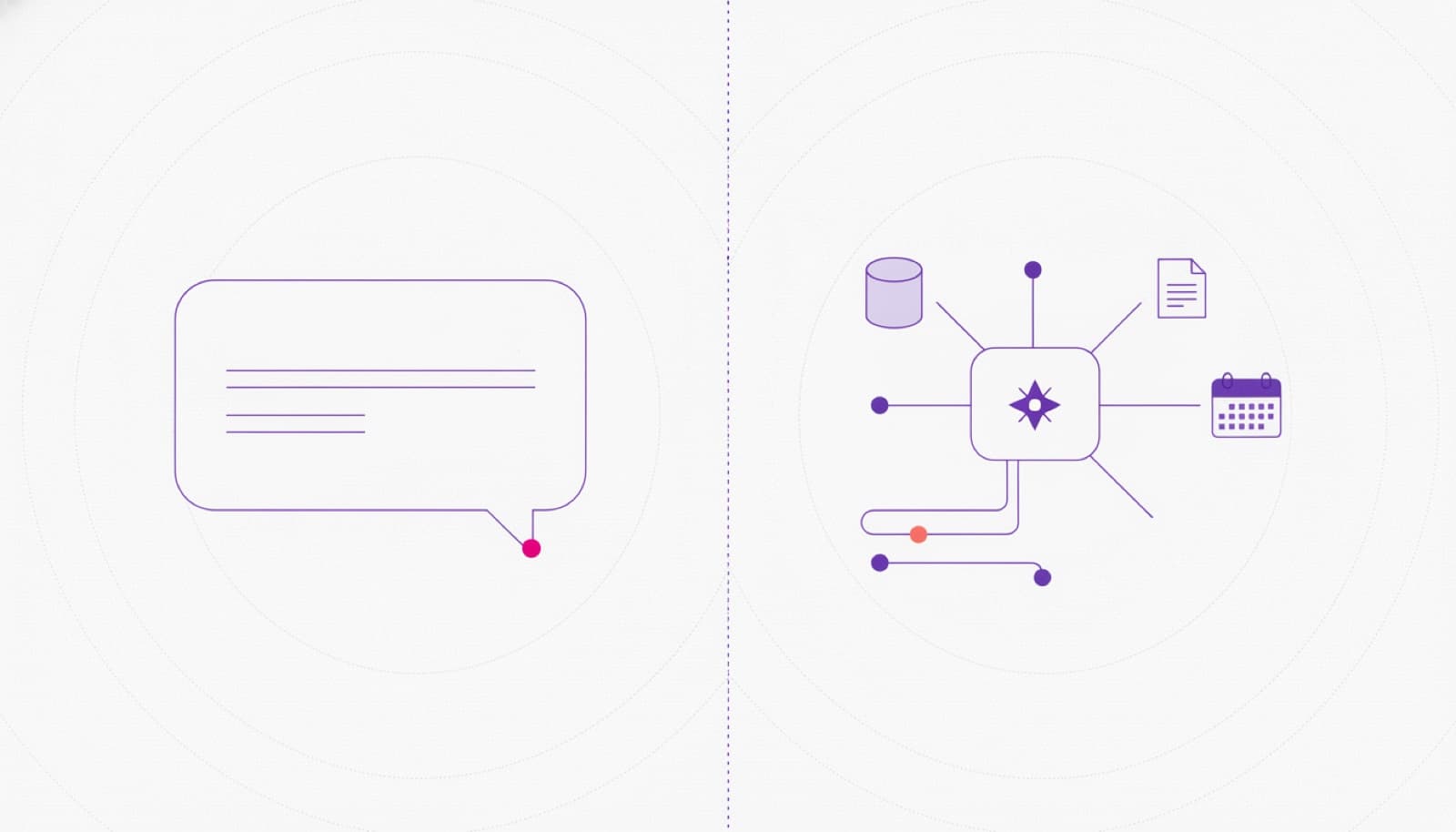
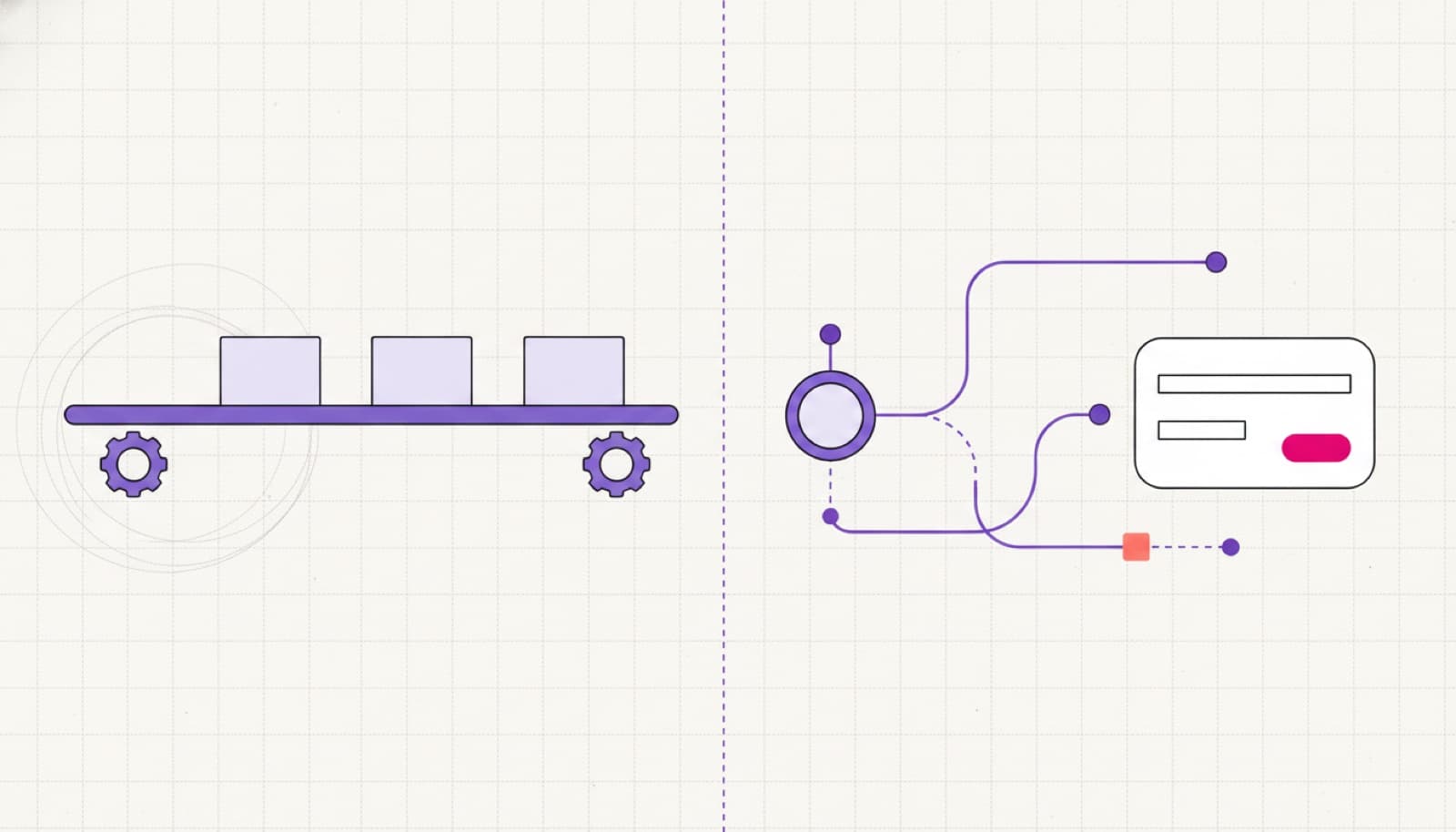
RPA (robotic process automation) records a fixed sequence of clicks and keystrokes and replays it. It is a macro with a nicer dashboard. An AI agent, by contrast, is given a goal and works out the steps itself, adapting when the input isn't what it expected. RPA follows the map. The agent reads the terrain.
Both automate work, so they get lumped together. The difference is what happens when reality doesn't match the plan. RPA breaks. An agent copes.
Traditional automation / RPA
- Executes explicit, pre-defined rules — if this exact field, click that exact button.
- Is fast and cheap to run when every input is identical.
- Breaks when a form changes, a field is blank, or an edge case appears.
- Needs a developer to update the script every time the process shifts.
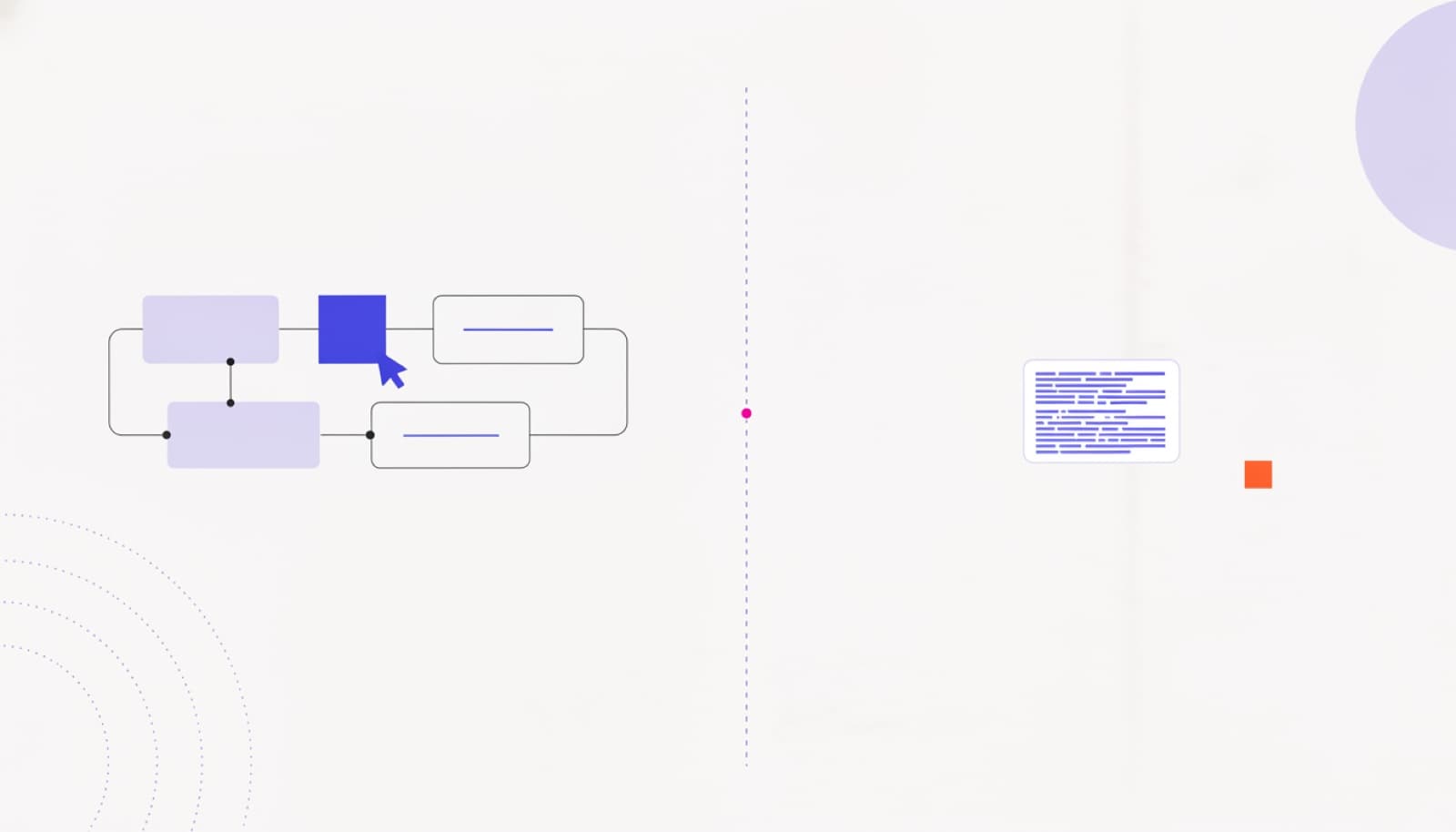
- Cannot read unstructured input — a PDF that's laid out differently, an email in plain English.
AI agents
- Work from a goal, not a keystroke recording, and choose the steps to reach it.
- Read unstructured input — emails, documents, chat — and pull out what matters.
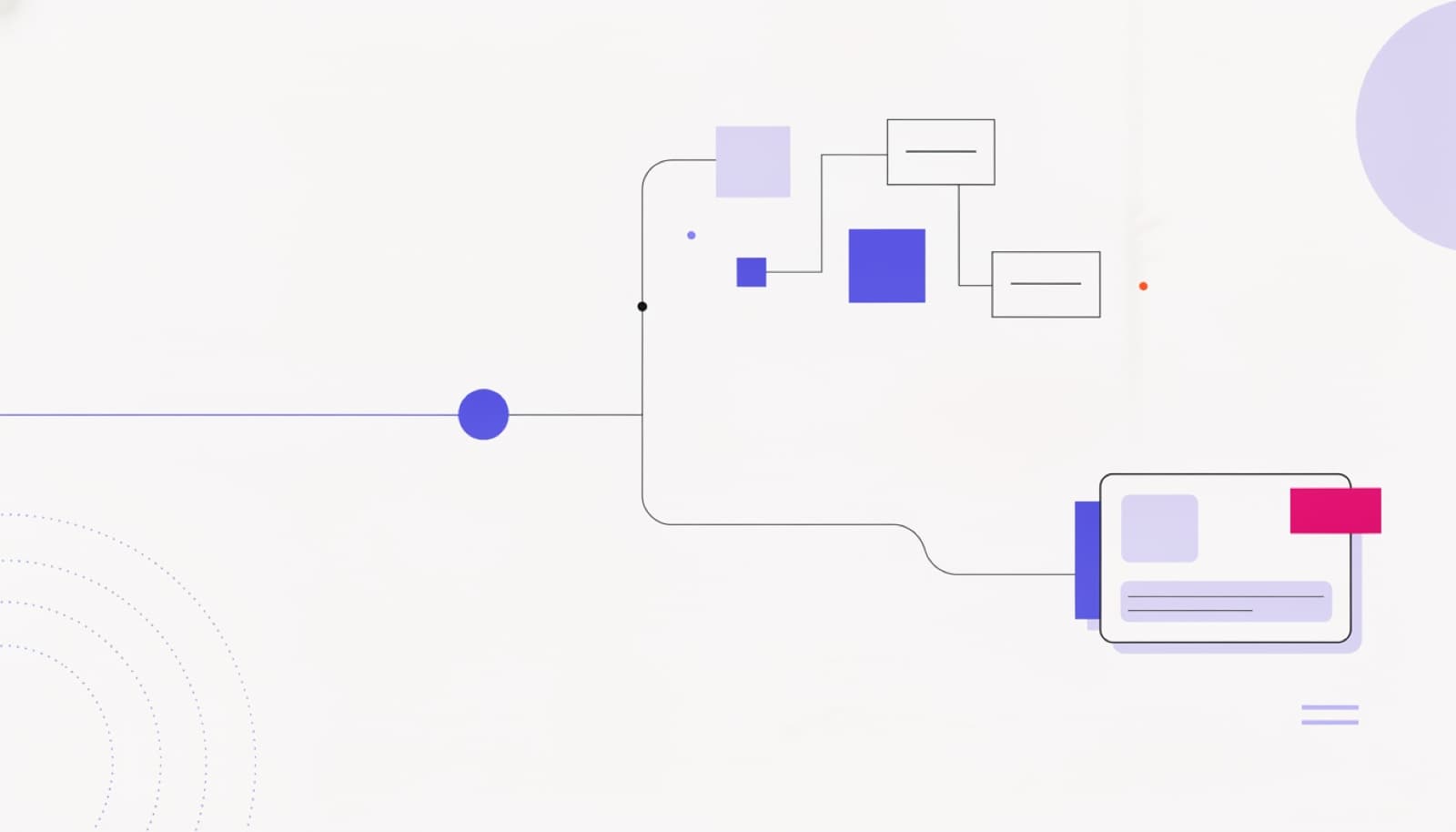
- Handle the exception instead of halting on it, escalating only when genuinely stuck.
- Adapt when the underlying system changes, within the guardrails you set.
- Cost more per run, and earn it on the cases a script could never survive.
The 80/20 that decides which you need
Most business processes are roughly 80% predictable and 20% exceptions. RPA is excellent at the 80% — the identical, high-volume, don't-think-just-do part. But the 20% is usually where the cost and the frustration live: the malformed invoice, the customer who phrased it oddly, the record that doesn't reconcile. That 20% is what jams an RPA bot and lands back on a person's desk.
An agent is built for the 20%. It reasons about the odd case, decides what to do, and only pulls in a human when it truly can't. The best systems often use both: RPA for the deterministic plumbing, an agent for the judgment. You don't always have to choose — but you do have to know which part of the work is which.
A rigid script sized for normal volume would have buckled. The work that scaled to five million passengers had to absorb changing rules and changing load without a developer rewriting it every week — the kind of adaptation a fixed automation can't give you.
How to tell which one your process wants
Look at how often the process changes and how varied the input is. If the input is structured and stable — same form, same fields, same order, every time — RPA is the right tool and an agent is overkill. Don't pay for reasoning you don't use.
If the input is messy or the rules shift, RPA becomes a maintenance tax: someone is forever patching the script. That is the signal to reach for an agent, which absorbs the variation instead of shattering on it.
- Structured input, rules that rarely change, high volume — RPA.
- Unstructured input, frequent exceptions, judgment required — agent.
- A stable pipeline with a messy step in the middle — RPA for the pipeline, an agent for the step.
“The question isn't whether it automates. It's what it does when the input is wrong. A script stops. An agent decides.”
DBrothers — automation vs. agents
The honest short version: RPA automates the steps you can write down. An agent automates the judgment you can't. Pick by how much of your process is the second kind.