What does using AI on a case file mean?
The preparatory stage is when the office gathers documents and facts before deciding on an application. It is the longest part of many procedures, and where AI can save time: reading attachments, checking that everything is there, putting the data in order.
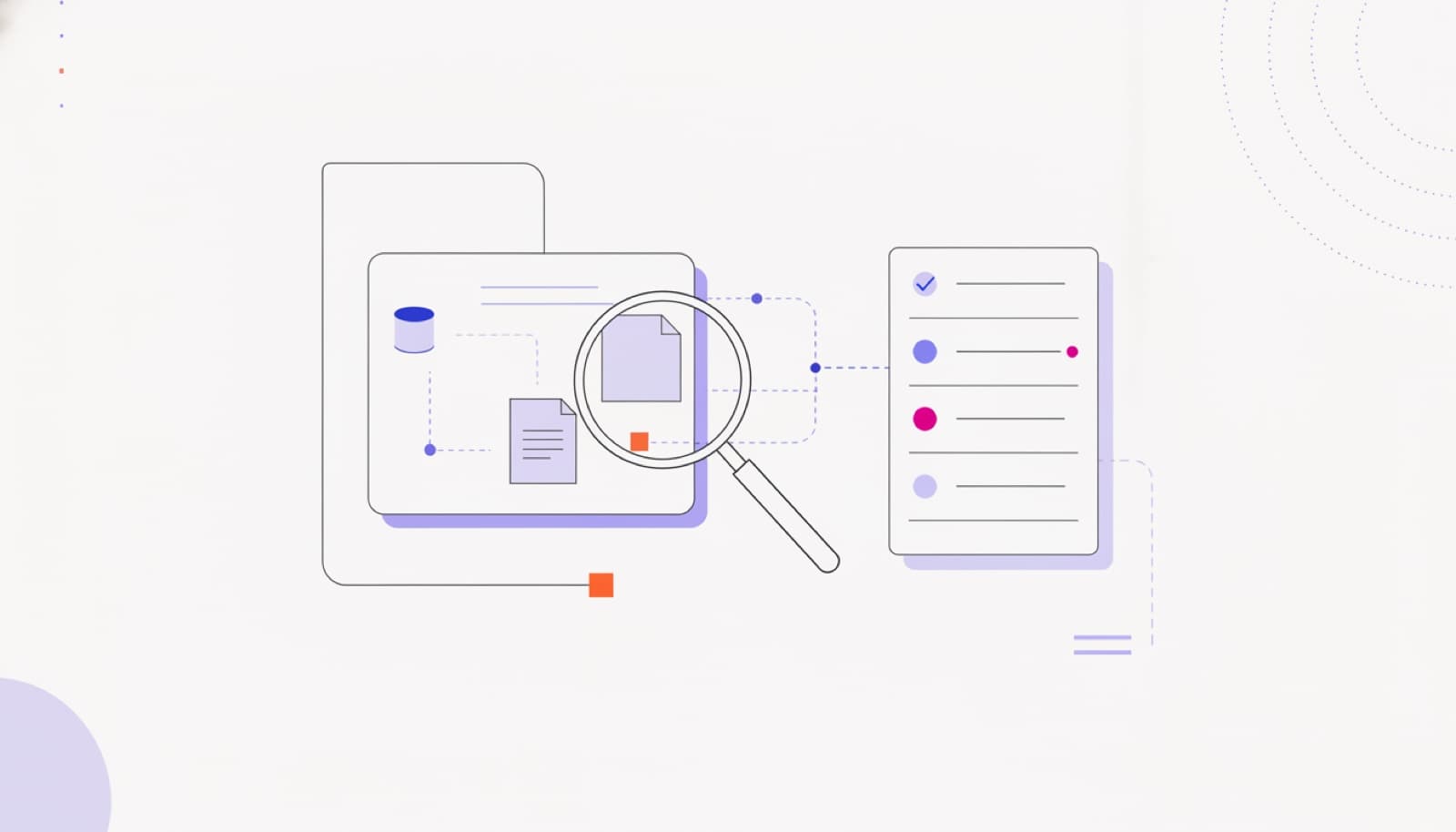
A worked example, not a real authority. The social services office of a group of Italian municipalities receives 900 applications for a rent subsidy. AI extracts data from the documents and flags inconsistencies, such as an expired means-test certificate or an unregistered lease. The officer assesses each application and signs.
When is it a preparatory task?
The AI Act lists as high-risk the systems that assess whether a person is entitled to essential public benefits and services, or that grant, reduce or revoke a benefit. Article 6, however, excludes systems that do not materially influence the decision, for example when they perform a preparatory task or a narrow procedural task.
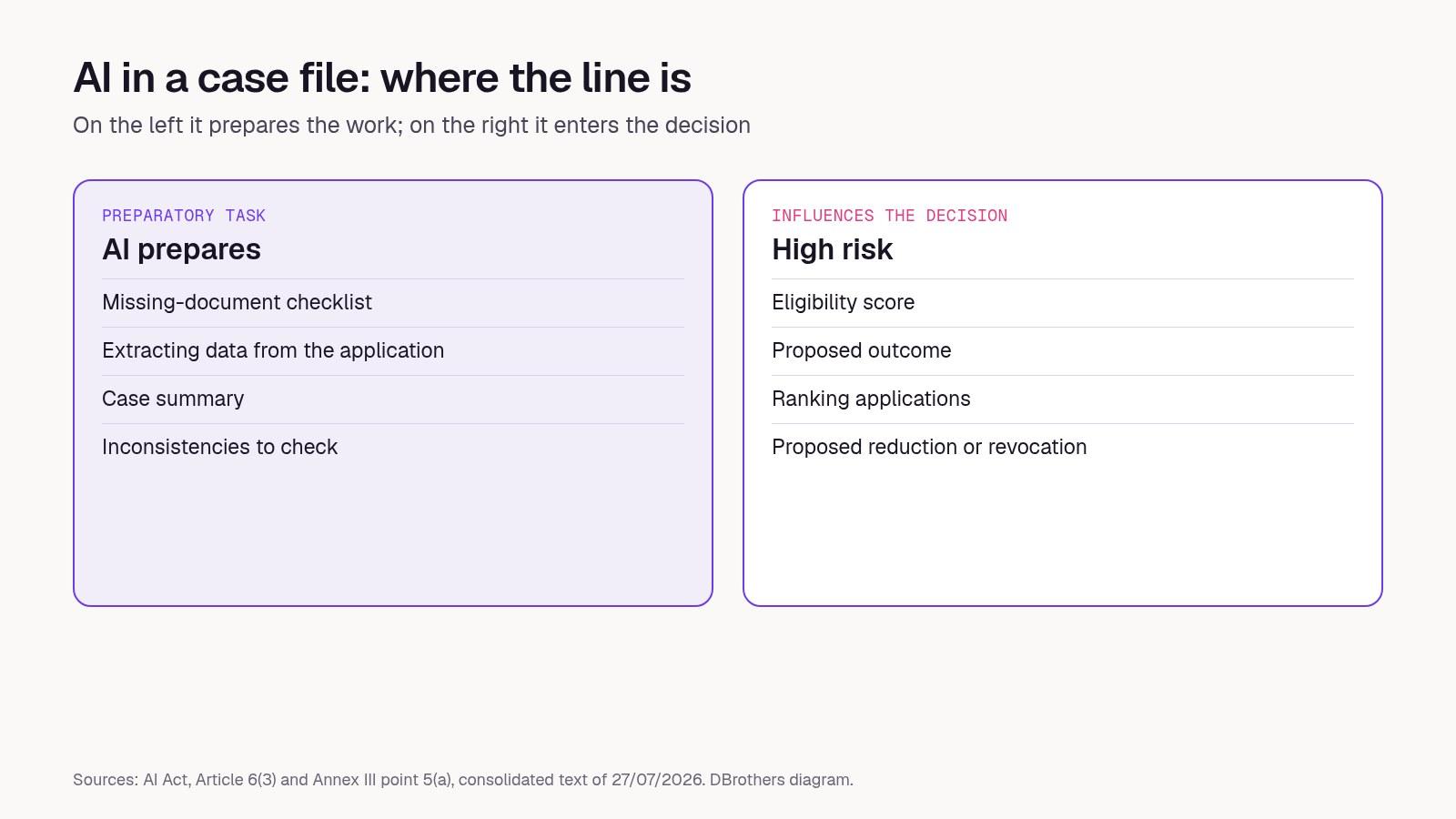
Our reading: in the example, the document checklist and data extraction are preparatory tasks. If the system gave each application a 'deservingness' score, or ranked applications by priority, it would influence the decision. Watch out for profiling too: a system that evaluates people based on their data always stays high-risk.
What does Italian law already require?
- Reasons. Law 241 of 1990, Article 3, requires every decision to state the facts and legal grounds that emerged from the preparatory stage. This holds when an AI system prepared the file too.
- Accountability. Law 132 of 2025, Article 14, says AI plays a supporting role and the person remains solely responsible for the decision.
- Knowability. Italy's Council of State ruled back in 2019 that an algorithm used by a public body must be knowable and that the decision cannot rest on the machine alone.
- Automated decisions. GDPR Article 22 gives people the right not to be subject to a decision based solely on automated processing that significantly affects them, save for exceptions set by law.
For new large-scale processing of personal data, such as 900 applications with income certificates and leases, GDPR requires a data protection impact assessment, or DPIA, beforehand when the risk is high.
How do you set it up in practice?
- AI extracts and flags; it does not score people.
- Every flag links back to the original document, so the officer can check it in one click.
- The officer writes the reasons, not the system.
- No negative outcome without hearing the person first, as Article 10-bis of Law 241 already requires.
- Every use goes into the authority's register with its classification before it starts.
Where do we stand?
How we would set it up for the office in the example: the agent prepares a sheet for each application with the extracted data and the inconsistencies, each linked to the document. The officer confirms or corrects, writes the reasons and signs. The system sees no rankings and proposes no outcomes.
So how far can you go?
- If AI checks documents, extracts data or summarises, you can start once the DPIA, privacy notice and register are in order.
- If AI proposes an outcome or an order among applications, prepare for the high-risk obligations and involve the data protection officer from the start.
- If AI decides on a benefit by itself, stop: Italian law requires the decision to stay with a person.
“AI can prepare the file. The reasons and the signature stay with the officer.”
DBrothers — on AI in public procedures
FAQ
If the officer signs, is the decision always human?
Not necessarily. If the officer simply adopts a machine score, the decision may in practice depend on the system. That is why AI should not score applications and a person should write the reasons.
Do the high-risk rules already apply?
No. For systems on the AI Act list, obligations start on 2 December 2027. Italian rules on reasons and accountability, and GDPR, already apply.
Can the rules still change?
Yes. The European Commission's guidelines on Article 6 were still in draft at our last check. We will update this page if they change.
Pick a procedure with many similar applications and look at how much time goes into checking documents. That tells you whether AI can help prepare the file without touching the decision.