
Smart queues and AI workload monitoring for private clinics
A centralised patient registry, intelligent booking, shift management, and AI analytics give private clinics real-time workload monitoring — cutting queues and rebalancing staff across departments from a single view of visit and treatment performance.
The challenge
- Clinics and health centres grapple with long patient queues and inefficient booking systems.
- Staff are often allocated sub-optimally across departments, with no integrated view to balance the load.
- Without a single system, managers can't see visit and treatment performance clearly enough to fix the bottlenecks.
What we did
- We built a platform combining a centralised patient registry, an intelligent booking system, departmental shift management, and emergency handling.
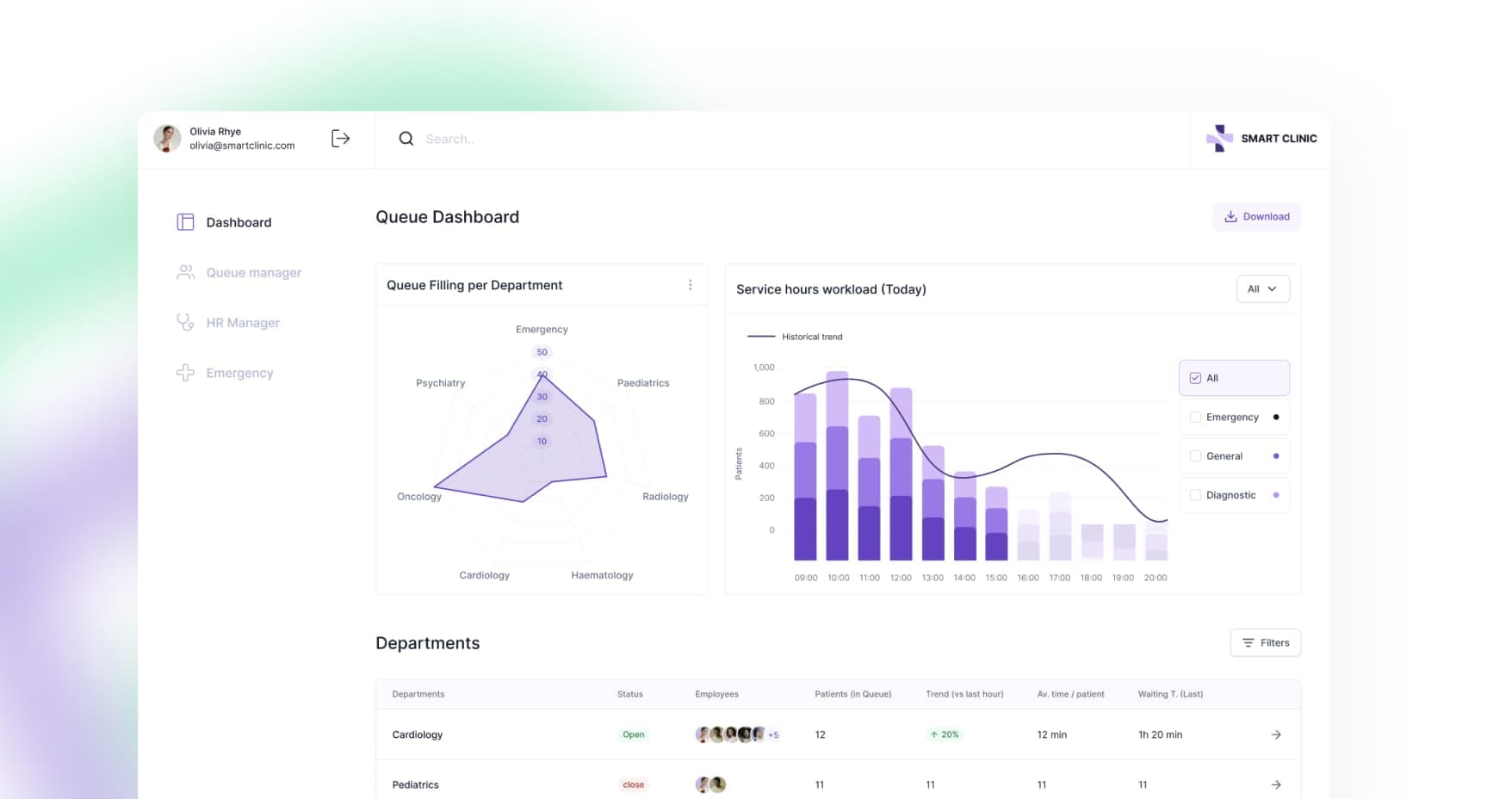
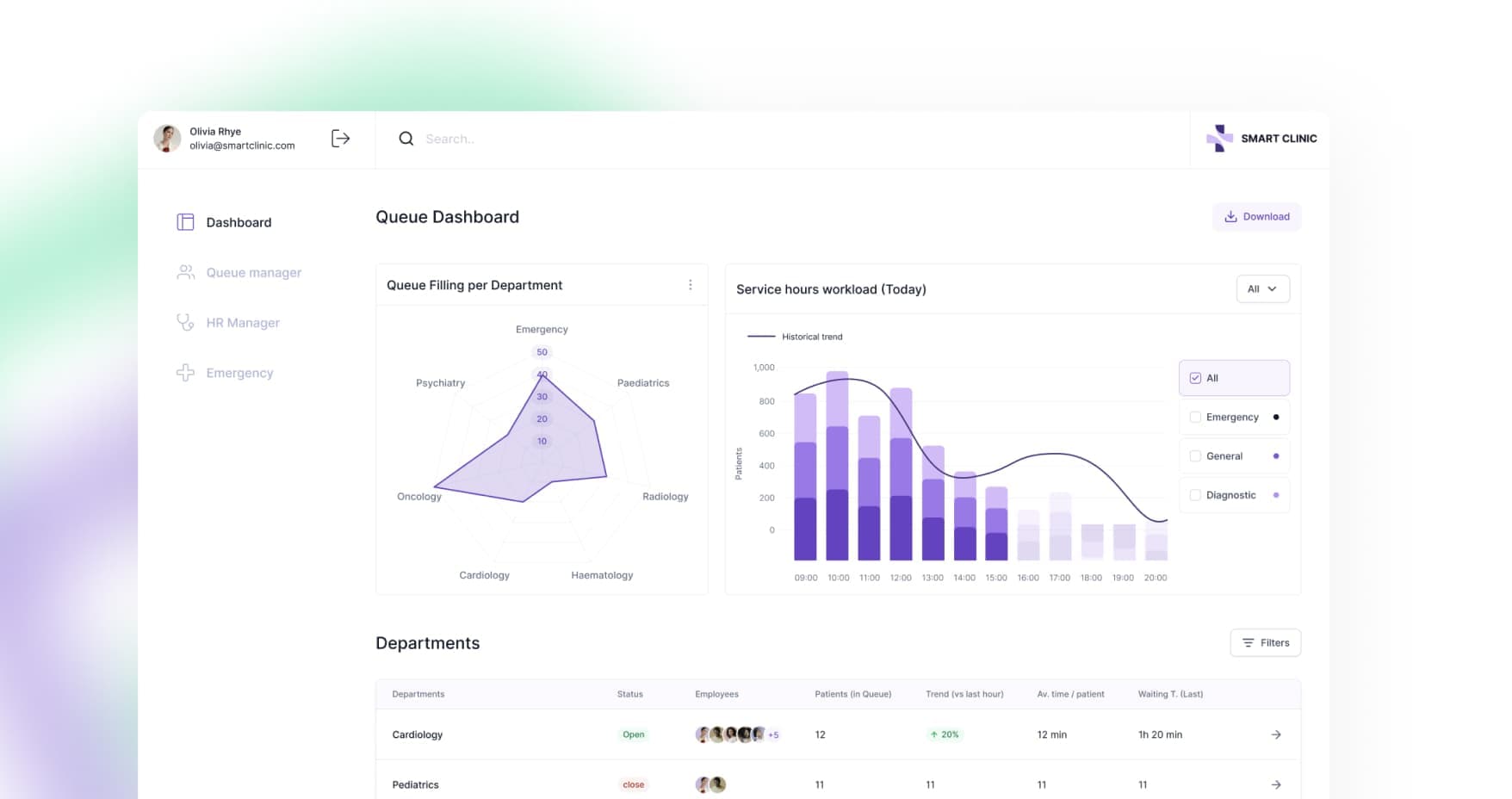
- AI-powered analytics give clinics a complete view of visit and treatment performance.
- The system flags areas of inefficiency so managers can act on them directly.
- Smart queues and shift management rebalance staff and appointments in real time.
Results
- 5clinic operations unified: registry, booking, shifts, emergencies, analytics
- 1real-time view of visit and treatment performance
The context
Private clinics and health centres carry a lot of operational drag. Patients wait in long queues, booking is inefficient, and staff are spread across departments without much to guide who should be where.
The root cause is a missing single view. When registration, scheduling, and shift data live in separate places, managers can't see visit and treatment performance clearly enough to fix the bottlenecks, so the same problems recur.
What we built
Our Lifedex team built a platform that pulls the moving parts of a clinic into one system and adds analytics on top.
- A centralised patient registry that simplifies patient management.
- An intelligent booking system that optimises appointment scheduling.
- Departmental shift management that streamlines staff allocation.
- Emergency handling for critical situations, backed by AI-powered analytics that flag where to improve.
How it works in production
Registration, booking, shifts, and emergencies run through one system, and the analytics layer reads across all of it. Instead of reacting to a queue that has already formed, a manager sees where load is building and rebalances staff and appointments against a live picture of visit and treatment performance.
The outcome
The clinic gets a complete, real-time view of how visits and treatments are performing, with inefficiencies surfaced rather than guessed at. That turns queue and staffing decisions into something managers can act on directly, from one place.


§ 03
Have a workflow like this?
Book a 30-minute scoping call: we map one workflow, the modules it needs, and the hours a system would return.